Hungarian standard door sizes follow the needs of most types of apartments well, yet there are many situations where the standard size does not fit well or it would be too much work to install, so a custom door will be the safer choice. The size of interior openings is rarely perfectly identical, especially in old apartment buildings or converted spaces.
When is a standard size enough and when is a custom size needed?
When is a standard size enough and when is a custom size needed? A significant portion of Hungarian homes were built to the general standard meters. The construction practice of the past decades – whether it is a panel apartment, a newly built condominium or a family house – has mostly settled on doors 75–90–100 cm wide and 210 cm high. Dozens of manufacturers offer ready-made products for these sizes, with fast delivery times.
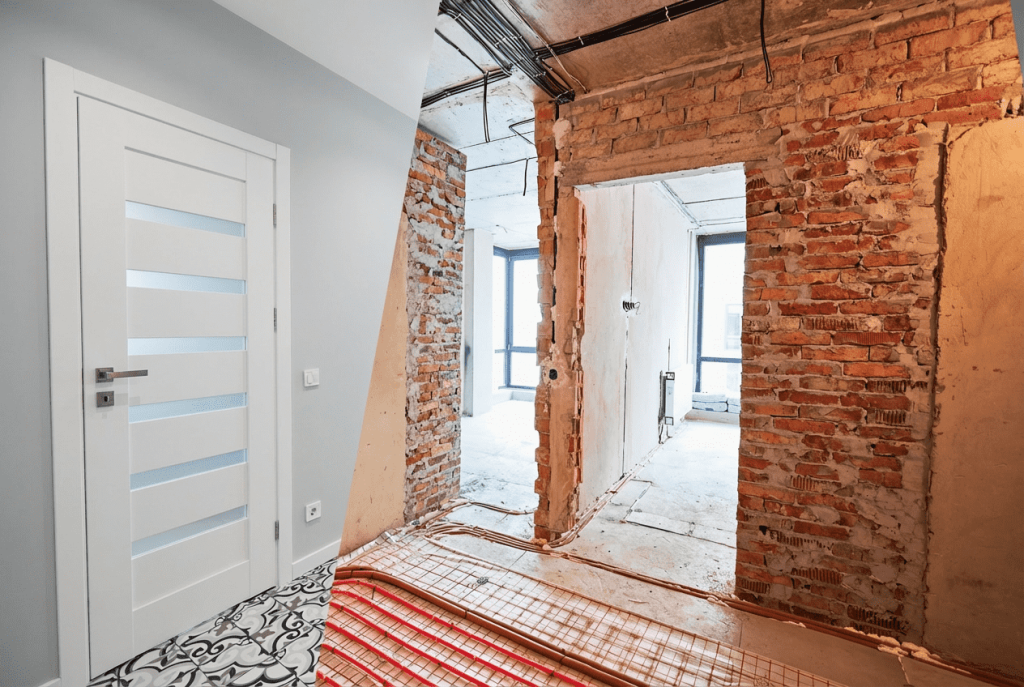
The situation is different in the case of renovation
In such cases, a standard door can also be installed, but it can often mean a compromise. For example, they can only be installed with a larger cover strip, a lot of post-processing, gap filling, or a less aesthetic fit. This is the reason why many people immediately look for the option of a custom door for renovation instead of the Hungarian standard door sizes.
The vast majority of renovators are therefore faced with the fact that the wall openings in the apartment differ slightly from each other.
In new construction, the standard is almost always enough
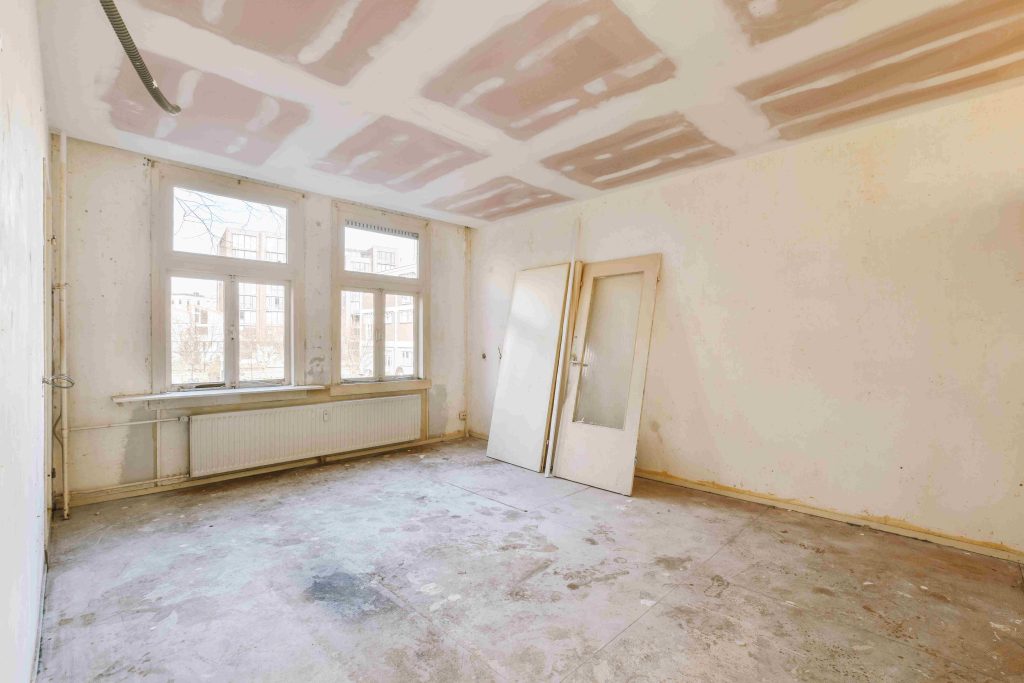
Standard installation is trouble-free in 90% of apartments - whether it's practical 75/90 cm openings or larger passage doors.
When designing a new house or apartment, contractors are already guided by standard size logic. There is no real advantage to being unique here, apart from aesthetic special features. Therefore, in 90% of apartments, standard interior door sizes can be installed without any problems, whether it is the practical 75/90 cm openings or the larger passage doors.
Size logic clearly understood
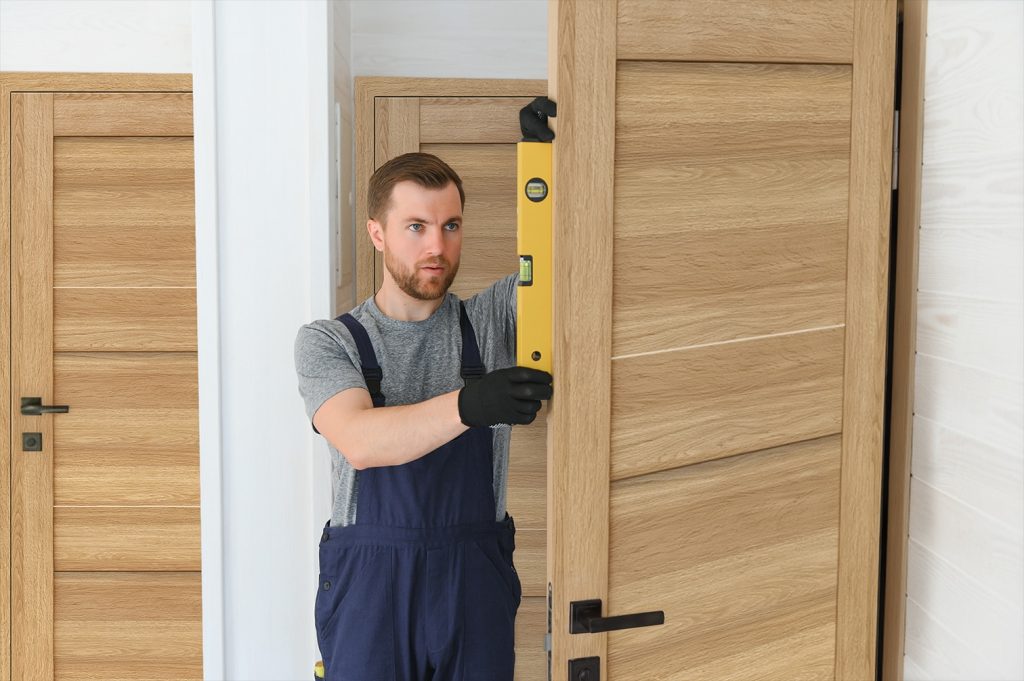
Choosing the right door always starts with measuring the wall opening. Most wrong decisions come from the buyer only looking at the size of the door leaf, not the entire structural requirement. However, after a short explanation, it becomes quite easy to understand. With interior doors, the size of three key elements determines the size of the door you will ultimately need:
Wall opening – frame – permeability
- Wall opening size
This is the basis. This is what we measure in the wall: top, middle, bottom. This determines what kind of frame will actually fit in the wall opening. Since wall openings are never millimeter accurate, manufacturers always leave a minimum installation gap around the frame. - Outer size of the door
The frame fills the wall opening. The thickness of the frame can vary (depending on the wall thickness), so the size of the wall opening and the type of frame are related: if the wall is thicker, the frame will be thicker too. - Passability size
This is the size that you actually pass.
Every door "loses" a few centimeters due to the frame, hinges, hinge side and stop.
For example, the passage of a 90 cm door is actually about 86 cm.

Opening direction and space requirements in everyday use
But the doorway's size is just one factor. At least as important is the opening direction's question too. We see that many people only focus on size and ignore the question of which way the door should open. Even though there are many cases where external factors have to be taken into account, what will be behind the door, what will be the first thing you see when you open it, how much space will be in front of and behind the door, etc.
The wrong opening direction can cause the following problems, among others:
- The space can be even narrower if the door opens into a narrow corridor,
- can block incoming light,
- in smaller bedrooms it can bump into furniture,
- It can often be problematic in the kitchen if the refrigerator or kitchen counter is behind it.
Therefore, the best thing you can do is to think ahead about the future use of the room.
Aesthetic and cost considerations that cannot be neglected when choosing a standard or custom door
The advantages of standard doors are quite easy to define: cost-effectiveness, quick availability, more favorable price, and uniform design.
For example, in the ERKADO range, standard sizes are always in stock, therefore
you can count on fast delivery.
Custom doors come to the fore where the standard would show something. These can be:
- Extremely different wall opening height or width,
- Old building apartment with high ceilings,
- Special design concept,
- Large difference in case thickness, or possibly
- Adaptation to sliding door cassette solution.
A custom door may therefore be more expensive, but the end result is always more aesthetic and fits better into the space.
In places where a custom size is needed but a standard door is still used, it is often noticeable that there are many joints, large covering strips or gap fillings. In such cases, a custom-made interior door increases visual consistency and long-term value retention.
Quick checklist for your decision
If you want to briefly decide whether the Hungarian standard door sizes are sufficient for you, you should go through this list:
- Door opening measurement accurately
– Measure the doorway at three points (top, middle, bottom), and if there is a difference of several centimeters, the easier way will be unique. - Are you planning to replace the cladding?
– If you are building and the paving will be laid later, take into account +1–1.5 cm for the paving slab! - Opening direction
– Think about how the passage will be most comfortable and safe. - Cost–time frame
– If you need a solution urgently, the standard is cheaper and faster, but if the doorway is non-standard, it is better to wait for the production time, because it gives a more precise fit. - Aesthetics
– If too much adjustment is needed around the frame, you are probably better off with a custom door. A custom door will not have an oversized cover strip, nor will there be a large gap filling, which can make the door feel more massive.
If you took all of this into account, you may have already made the right decision.
Finally, we have collected frequently asked and recurring customer questions, which are also explained in the article!
Q&A – Frequently Asked Questions
- So what is the most common Hungarian standard door size?
The most common is 90 × 210 cm, but 75 cm and 100 cm wide options are also very common.
These come with standard case and strap placement, so they are easy and quick to access.
- How much smaller is the permeability than the nominal size?
Usually by 3–4 cm.
This means that a 90 cm door can actually fit through about 86 cm.
- When is it not recommended to use a standard door?
- if the wall opening is very slanted or defective,
- if the old apartment has several openings of different sizes,
- if special proportions or an extra high door are required,
- if the frame does not match the wall thickness.
- Does a unique door = an expensive door?
Not necessarily.
The cost difference typically results from the fact that the manufacturing process is not based on a template, but this often pays off in the long run due to the perfect fit.
- Is it better to choose something unique when renovating?
If the walls are not perfectly straight, then yes. A standard door can also be installed, but it may require aesthetic compromises. In the case of a custom door, the frame is adjusted to the millimeter to your wall opening.
But it is best to always contact a professional. Door and window distributors who also undertake installation usually offer on-site assessments. In fact, many offer this free of charge, so you can only win with this.
If you would like to delve deeper into the world of standard door sizes and door designs, it is worth checking out some more professional sources:
– https://en.wikipedia.org/wiki/Door
– EU Commission – Manual of Standard Building Specifications – door size requirements, minimum height, opening width, general technical principles used in European institutions Source of our article: https://erkado.pl/hu/blog/a-szabvanyos-ajtok-illeszkednek-a-legtobb-lakasba-vagy-egyedi-ajtokra-van-szukseg/